
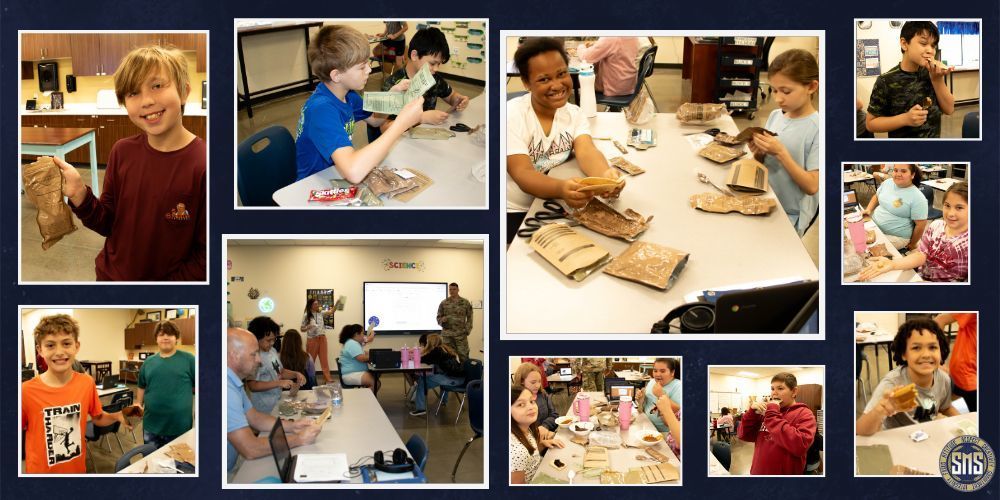
What do astronauts eat in space? It's a question that seems simple enough - until you're actually holding a vacuum-sealed pouch, wondering if you're supposed to just open it and dig in.
That's exactly where students in Mrs. Young's science class at Southside Middle School found themselves recently, as a unit on the International Space Station turned into one of the most memorable - and delicious - lessons of the year.
The class had been deep into studying life aboard the ISS when curiosity about the everyday details of astronaut life started bubbling up. What does it feel like up there? How do you sleep? And maybe most importantly - what do you eat?
To answer that last question, Mrs. Young brought in a special guest: Chas Furr of the Arkansas Army National Guard, who arrived armed with a collection of MREs - Meals, Ready-to-Eat - the same field rations used by military personnel and similar to what the space program crews eat in space.
Furr walked students through the science behind the meals, explaining the flameless chemical heating system that warms the main entrée through a thermal reaction - no microwave, no stovetop, just a clever packet of water and a heat element doing their job. He also gave students the honest rundown on taste: some MREs are genuinely good, he told them, while others are... perfectly fine, if not exactly something you'd order at a restaurant.
The variety of offerings gave students plenty to explore. Entrées included chicken and rice and chili with beans, while protein shakes in chocolate flavor and energy bars rounded out the nutritional picture. But let's be honest - the students who found Skittles and M&Ms tucked into their meal packs may have been the envy of the room.
Perhaps the best moment of the day came courtesy of one student who approached his meal with genuine scientific inquiry. Faced with a pouch of mango and peach applesauce, he paused and asked the only logical question: "So I just... open the top and eat it?"
He did. And his verdict?
"This is delicious!"
It's the kind of firsthand discovery that makes science come alive - and a reminder that sometimes the best lessons start with a simple question and end with a surprisingly good snack.